
- Module 1: The Substrate That Runs Paths in Your Enterprise (Live Session - Oct 7)
-
Live Kickoff + Module 1: The Substrate That Runs Paths in Your Enterprise (Oct 7)
-
Recording - The Substrate That Runs Paths in Your Enterprise (Live Session)
-
Resources
-
Discussion topic
- Module 2: Identity & Security: The Permission Surface
-
Identity & Security: The Permission Surface
-
Resources
-
Discussion topic
- Module 3: Context: What the Agent Knows
-
Context: What the Agent Knows
-
Resources
-
Discussion topic
- Live Q&A # 1 - Oct 14th
-
Live Q&A #1 - Oct 14th
-
Recording - Live Q&A - Oct 14
- Module 4: Capability: What the Agent Can Touch
-
Capability: What the Agent Can Touch
-
Resources
-
Discussion Topic
- Module 5: Execution: Where Agents Run (Live Session - Oct 21)
-
Execution: Where Agents Run (Live Session - Oct 21)
-
Recording: Execution: Where Agents Run (Live Session - Oct 21)
-
Resources
-
Discussion topic
- Module 6: Evaluation & Observability: The Feedback Surface
-
Evaluation & Observability: The Feedback Surface
-
Resources
-
Discussion topic
- Live Q&A #2 - Oct 28
-
Live Q&A #2 - Oct 28
-
Recording - Live Q&A - Oct 28
- Module 7: The Full-Path Build: Wiring Seven Pillars Into One Path
-
The Full-Path Build: Wiring Seven Pillars Into One Path (live session Nov 4th)
-
Recording: The Full-Path Build: Wiring Seven Pillars Into One Path (live session Nov 4th)
-
Resources
-
Discussion topic
- Module 8: Beyond Software: Enterprise Agentic Platforms and the Business Case
-
Beyond Software: Enterprise Agentic Platforms and the Business Case
-
Resources
-
Discussion topic
- Conclusion Live Q&A #3 - Nov 11
-
Conclusion Live Q&A #3 - Nov 11
-
Recording - Q&A #3 - Nov 11
- Course feedback survey
-
Course Feedback
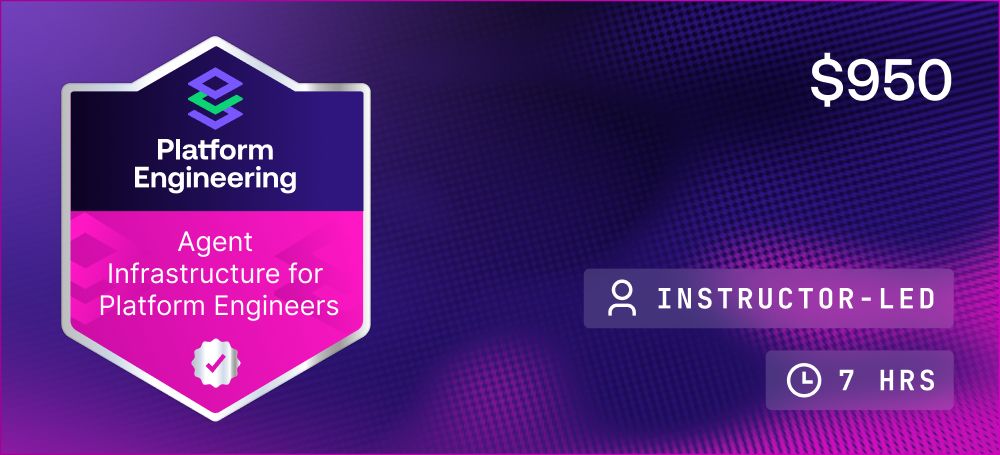
Agent Infrastructure for Platform Engineers (October 2026)
Hands-on course for platform engineers, AI system engineers, DevOps engineers and SREs, covering how to build the infrastructure, the Harness and the Governance plane that lets agents run securely at enterprise scale.
What you'll learn
By the end of this course, you’ll be able to:
 Design and build the Harness to run agents safely including execution, context, capability and eval. Design and build the Governance plane including identity, security and observability. Implement a 3-tier permission middleware (Safe → Moderate → Dangerous) that gates every agent action. Build a governed context substrate with just-in-time assembly, access control, and trusted data lineage. Stand up a bounded execution loop with iteration ceilings, sandboxing, and human-in-the-loop escalation. Extend the same infrastructure beyond engineering to autonomous workflows in marketing, finance, and HR and make the business case for it.
Prerequisites
Recommended completion of From IDP to ADP or equivalent platform engineering fluency. This is not a course about choosing models or writing agents but about building the substrate they run on.
Who's it for?

Platform & AI Systems Engineers
Building the next layer of their internal platform and owning the infrastructure agents run on.

DevOps, SREs & Infrastructure Engineers
Governing autonomous workloads at scale: execution environments, identity surfaces, policy layers, and agent observability.

Leaders
Engineering managers and tech leads who need to understand agent infrastructure architecture and communicate its value to the business.
Curriculum
8 MODULES · 8 QUIZZES · 3 LABSMODULE 1 OCT 7 • 16:30CET
The substrate that runs paths in your enterprise

 Where this course sits in the ADP curriculum: IDP → paths → agent infrastructure The three eras: prompt engineering → context engineering → harness engineering Why platform quality, not model quality, determines agent reliability The seven-pillar map as the course spine; Agent Infrastructure as Code One substrate for sales, marketing, finance, HR
MODULE 2 ON-DEMAND
Identity & security: the permission surface
Non-human identity: agents as first-class principals with least-privilege credentials The 3-tier permission middleware: Safe, Moderate, Dangerous Policy-as-code guardrails (OPA), prompt-injection defence, PII scrubbing, audit logging Lab: wire a 3-tier permission gate into a governed pathMODULE 3 ON-DEMAND
Context: what the agent knows
Context sources: repos, tickets, runbooks, incident history, telemetry Just-in-time assembly and graph-based relevance vs. "dump everything into RAG" Memory and state across a task Access control and trusted data lineage: agents read only governed sourcesQ&A OCT 14 • 16:30CET
Live Q&A
MODULE 4 ON-DEMAND
Capability: what the agent can touch
Tools as governed capability grants: every tool an explicit, scoped entitlement MCP, A2A, and AGNTCY interop; gateways as the capability plane Entitlement mapping back to the permission tiers Non-technical scoping: the finance agent gets the reconciliation API, not the platformMODULE 5 OCT 21 • 16:30CET
Execution: where agents run
The Bounded ReAct Loop: iteration ceilings, compaction, approval gates Control modes from assistive to bounded autonomy Orchestration, model gateway, sandboxed runtimes (LangGraph, LiteLLM, Kubernetes, Temporal, E2B) Lab: run an unbounded loop, observe failure modes, then add ceilings and sandboxMODULE 6 ON-DEMAND
Evaluation & observability: the feedback surface
Evaluative gates: LLM-as-Judge, output rubrics, promotion rules Traces, cost signals, silent failure, and drift detection FinOps as first-class: per-action cost, token routing, chargeback/showback Closing the loop: drift detection triggering automated remediationQ&A OCT 28 • 16:30CET
Live Q&A
MODULE 7 NOV 4 • 16:30CET
The full-path build: wiring seven pillars into one path
Walking a /pr-review path end to end through all seven pillars What breaks when a pillar is missing Capstone lab: assemble Modules 2–6 into one running governed pathMODULE 8 ON-DEMAND
Beyond software: enterprise agentic platforms and the business case
The same seven pillars running marketing, sales, and finance platforms Worked example: an autonomous marketing workflow on shared infrastructure Proving platform value: evaluation methodology for the leadership business case Roadmap: assess pillar maturity, prioritize, define the journeyCONCLUSION NOV 11 • 16:30CET
Final Q&A
Final Q&A Course feedback surveyMeet your Instructor
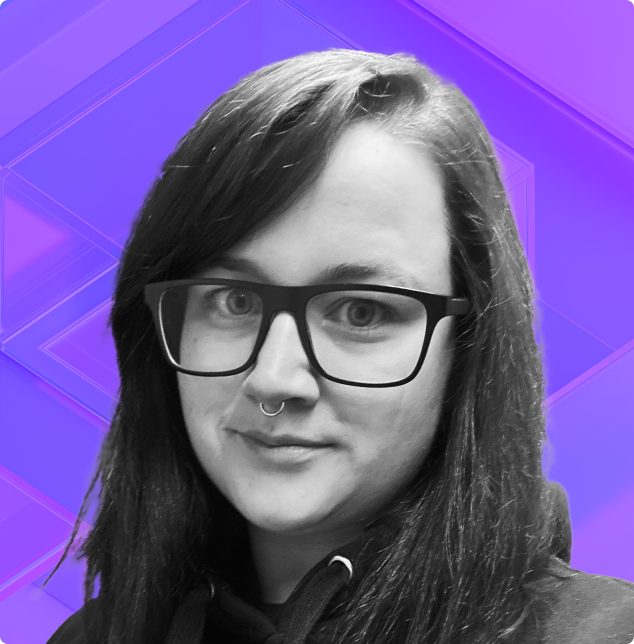
Mallory Haigh
Course instructor and Platform Engineering SME
 Full-stack engineer by background (LAMP stack veteran + PHP lifer)
 - Also experienced in: Engineering management, customer success, product development
- Platform Engineering SME, course instructor, trainer, and coach
- #horsegirl, farmer, cat+dog mom
|
Desktop
|
Mobile |
 |
|
| Desktop | Mobile |
 |
Alumni stories
| Testimonials | |||||
| Name | Image | Position | Text | LinkedinPost | |
| Jay Moran |  |
SVP of Platform Engineering & Distinguished Engineer at Fiserv | I don’t often feel certifications are too useful, but in this case beyond being not vendor specific, I think this is one certification that really helps define a “Platform Engineer” versus someone who does some of the many components of what goes into platform engineering… | https://www.linkedin.com/in/jaycmoran/ | https://www.linkedin.com/posts/jaycmoran_platformasaproduct-idp-platformengineering-activity-7364777833262448641-ku7Z/?utm_source=share&utm_medium=member_desktop&rcm=ACoAAB7W6ucBwi1gPqF5QCBe36ipfkH_n4Cityo |
| Daniel Palermi |  |
Senior Cloud Engineer at Serko | The Platform Engineering Practitioner certification helped me understand the evolution of DevOps and engineering practices over the years. It clarified the concept of platform engineering and its true purpose. In my opinion, everyone working in an IT company should take this course, as it offers valuable lessons that span across all roles. |
https://www.linkedin.com/in/daniel-palermi-4a5b881b/ | |
| Brittany Lebel |  |
Senior Product Owner, Kinsale Insurance | The Platform Engineering course was a transformative addition to my career. The content was well-structured, covering everything from designing Platform Engineering Maturity Models to developing reference architectures that drive standardization and empower developers with seamless self-service capabilities. The hands-on lectures on Pocket IDP provided an in-depth exploration of the entire implementation process, diving into technical details and real-case scenarios. This comprehensive approach offered invaluable insights into how an IDP functions as a product and how it can efficiently support production workloads.Thanks to this course, I now have the expertise to contribute meaningfully to the development and enhancement of our Internal Developer Platform, enabling us to accelerate application delivery cycles.I highly recommend this course to anyone eager to elevate their engineering expertise and make a tangible impact in platform engineering! | https://www.linkedin.com/in/brittany-lebel/ | |
| Marc Schnitzius |  |
Service Lead Platform Engineering at Codecentric AG | The Platform Engineering Certified Practitioner course is a great guide for better understanding that the success of an internal developer platform is not just about making developers happy and shifting all their problems to a platform team. | https://www.linkedin.com/in/marc-schnitzius/ | |
| Rafael de Araujo Pires |  |
Global Director of Architecture at AB InBev | The Platform Engineering Practitioner certification was more than concepts. It was a reflection on my own platform journey since 2022.The biggest lesson? Platforms are about people. It’s about listening, building trust, and reducing friction so teams can deliver value with autonomy. It’s about connecting culture, product, and technology, and showing that developer satisfaction can be as strategic as any infrastructure investment.Platform engineering isn’t just code: it’s people, trust, and real business impact. | https://www.linkedin.com/in/rafaeldearaujop/ |
| Desktop | Mobile |
 |
|
| Question | Answer |
|
Why this course? |
Unlike other programs, this course blends technical, product, and business frameworks so you can actually build and scale a successful platform initiative, not just understand the tech. |
|
What will I learn? |
You’ll master platform engineering fundamentals: how to design an Internal Developer Platform, build golden paths, and scale adoption across teams, all using proven frameworks from top platform teams. |
|
How is it delivered? |
Live weekly sessions (recorded if you can’t join), self-paced modules, guest lectures, and an active Slack community of 500+ platform engineers. |
|
How much time will it take? |
About 3 hours per week for 5 weeks, including optional homework. All sessions are recorded for flexible learning. |
|
When will the instructor-led live sessions take place? |
The sessions (unless stated otherwise) take place on Tuesdays at 6:30 pm CET/12:30 pm ET. But remember - all recordings are shared, so it’s easy to take the course asynchronously. |
|
Is this course for me? |
It’s for engineers, platform leads, and managers who want to align technical and business goals around platform engineering. No coding required. |
|
I’m not an engineer, will I still benefit? |
Absolutely. The course is designed for both technical and non-technical leaders. You’ll gain a shared framework for platform success across teams. |
|
Do I get a certificate? |
No. This course only contains a completion badge. |
|
What if I can’t attend live? |
No problem, every session is recorded and available on demand. |
|
Can I pay by invoice or installments? |
Yes, just contact us to arrange. |
|
Can I buy now and start later? |
Absolutely. Just contact us to arrange and join any future cohort. |
|
Do I need any specific tools or technologies? |
No special setup needed, just a laptop. A basic understanding of DevOps concepts (like Kubernetes or IaC) helps, but isn’t required. |
|
Is coding required? |
No. The course focuses on frameworks, adoption, and product thinking, not hands-on coding. |
|
What technologies are discussed? |
We reference tools like Terraform, Backstage or Kubernetes, but the focus is on best practices for platform design, not on tool-specific tutorials. |
|
Do you offer private training for teams? |
Yes, we run private team cohorts (virtual or in-person) tailored to your platform maturity and goals. Contact us for more information. |
|
Still have questions? |
Contact certifications@platformengineering.orgFor team or group enquiries (training, private cohorts, workshops): Contact advisory@platformengineering.org |