PlatformEngineering.org My Courses FAQs

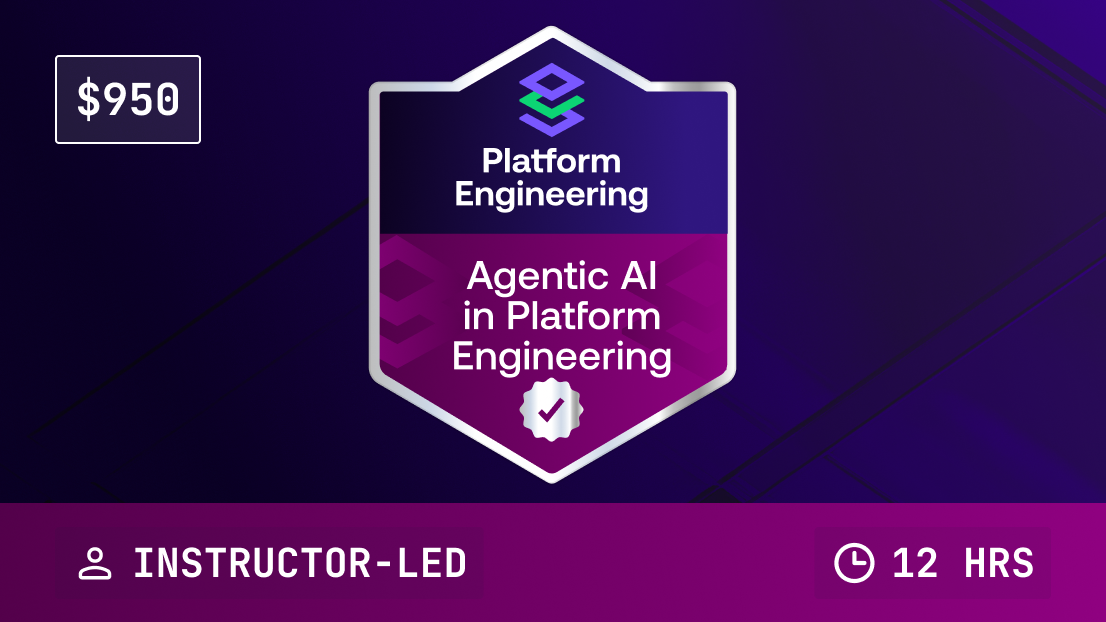
Agentic AI in Platform Engineering

Master the next frontier of platform engineering: Agentic AI. Learn how autonomous agents reason and adapt to reduce cognitive load and accelerate the SDLC. Move beyond simple automation to build self-optimizing ecosystems that scale with confidence, innovation, and enterprise governance.

rate limit

Code not recognized.

About this course

START DATE May 13
TIME COMMITMENT 12 hours
DURATION  4 weeks
PRICE $950
FORMAT Instructor-led, live and on-demand


What you'll learn

By the end of this certification, you’ll be able to:

checkmark Explain the shift from automation to agentic AI and articulate what makes an AI system truly “agentic”
checkmark Design agent-aware workflows in GitHub Actions, integrating LLMs with events, logs, APIs, and quality gates to create intelligent CI/CD pipelines
checkmark Build AI-powered diagnostic loops that ingest failure context, reason about root causes, and generate structured remediation proposals or self-healing fixes
checkmark Implement intelligent release decisions using multi-signal quality gates (test coverage, performance, security, cost) and generate auditable release rationale reports
checkmark Deploy your own end-to-end platform engineering agent, capable of diagnosing pipeline failures, evaluating release readiness, and autonomously opening a fix PR or escalating with structured context
 
salary callout
86%
report platform engineering
is essential to realizing AI's
business value


Who's it for?

Practitioners

DevOps and SREs who want to move beyond scripted automation to deploy autonomous agents that reason and adapt. You will learn to use GitHub Actions and Claude Code to automate complex diagnostic tasks, remediation, and self-healing workflows.

Platform Engineers

Platform Engineers looking to build next-gen agentic platforms that reduce cognitive load by integrating AI as a core capability. You’ll master building self-optimizing CI/CD pipelines and conversational observability interfaces to manage platform health at scale.

Leaders

Heads of platform and product owners tasked with driving the shift from reactive operations to intelligent platforms. Learn to manage architectural shifts toward agentic AI setups while ensuring governance, audit trails, and enterprise-scale risk mitigation.


8 MODULES  · LIVE SESSIONS INCLUDED

CURRICULUM

Complete the modules in order. Quizzes throughout.

MODULE 1 Platform engineering pain points and the AI opportunity
The strategic role of platform engineering in the age of AI

From static scripts and CI/CD automation to agentic AI
See a live comparison of manual vs. AI-driven diagnosis
MODULE 2 Agentic AI fundamentals - how agents reason and act?
Learn core agent components (LLMs, memory, and tools)
Compare event-driven vs. polling architectures
Balance autonomous actions with human oversight
MODULE 3 Environment setup & your first agentic workflow
Set up an agentic runtime that responds to CI/CD events
Connect an AI agent to your pipeline's event stream and context
Trigger your first agent run and interpret its reasoning logs
MODULE 4 AI-powered diagnosis and remediation
Compare manual vs. AI-driven incident diagnosis
Build agents that read logs, reason about failures, and propose fixes
Define escalation boundaries: when the agent self-heals vs. asks a human
MODULE 5 Intelligent CI/CD & adaptive delivery
Move beyond pass/fail pipelines to AI-driven release decision
Automate rollback decisions using AI quality gates
Query pipeline state and release history using natural language
MODULE 6 Operational intelligence & conversational observability
Replace complex dashboards with AI anomaly detection
Check platform health via chat interfaces
Shift from reactive alerts to predictive management
MODULE 7 Multi-agent coordination & implementation strategy
Architect multi-agent systems for complex platform workflows
Handle agent conflicts, failures, and graceful degradation
Design a phased enterprise rollout with guardrails and audit trails
MODULE 8 Build your platform engineering agent
Wire together diagnosis, quality gates, and observability into one agent pipeline
Implement self-healing PRs with confidence thresholds
Shift your role from platform operator to AI supervisor

LIVE SESSIONS

Cohort-based sessions with the instructor.

Join live for Q&A, guidance, and accountability. Dates shown here are the next cohort.
KICKOFF MAY 13 · 18:00 CET
LIVE Q&A #1 MAY 20 · 18:00 CET
LIVE Q&A #2 MAY 27 · 18:00 CET
LIVE Q&A #3 JUNE 3 · 18:00 CET


Meet your Instructor

Mallory Haigh

Ajay Chankramath

Founder, CEO @ Platformetrics

LinkedIn icon Connect with me on LinkedIn
  • bullet-icon Co-author of Effective Platform Engineering (Manning) and Domain-Driven Platform Engineering (Springer) and Author of Platform Engineer's Handbook (Packt)
  • bullet-icon Expertise in Platform engineering, GenAI in software delivery, Developer experience optimization, SRE, DevOps
  • bullet-icon 35+ years of experience in software development and delivery as a developer, architect and leader
  • bullet-icon Regular keynote presenter, workshop educator at Platform Con, DevOpsDays, Kube Days, All Day DevOps, and the DevOps Enterprise Summit (ELTS)
 
 
Desktop
Mobile


Alumni stories
 
Testimonials          
Name Image Position Text Linkedin LinkedinPost
Jay Moran SVP of Platform Engineering & Distinguished Engineer at Fiserv I don’t often feel certifications are too useful, but in this case beyond being not vendor specific, I think this is one certification that really helps define a “Platform Engineer” versus someone who does some of the many components of what goes into platform engineering… https://www.linkedin.com/in/jaycmoran/ https://www.linkedin.com/posts/jaycmoran_platformasaproduct-idp-platformengineering-activity-7364777833262448641-ku7Z/?utm_source=share&utm_medium=member_desktop&rcm=ACoAAB7W6ucBwi1gPqF5QCBe36ipfkH_n4Cityo
Daniel Palermi Senior Cloud Engineer at Serko The Platform Engineering Practitioner certification helped me understand the evolution of DevOps and engineering practices over the years. It clarified the concept of platform engineering and its true purpose. In my opinion, everyone working in an IT company should take this course, as it offers valuable lessons that span across all roles.

https://www.linkedin.com/in/daniel-palermi-4a5b881b/  
Brittany Lebel Senior Product Owner, Kinsale Insurance The Platform Engineering course was a transformative addition to my career. The content was well-structured, covering everything from designing Platform Engineering Maturity  Models to developing reference architectures that drive standardization and empower developers with seamless self-service capabilities. The hands-on lectures on Pocket IDP provided an in-depth exploration of the entire implementation process, diving into technical details and real-case scenarios. This comprehensive approach offered invaluable insights into how an IDP functions as a product and how it can efficiently support production workloads.Thanks to this course, I now have the expertise to contribute meaningfully to the development and enhancement of our Internal Developer Platform, enabling us to accelerate application delivery cycles.I highly recommend this course to anyone eager to elevate their engineering expertise and make a tangible impact in platform engineering! https://www.linkedin.com/in/brittany-lebel/  
Marc Schnitzius Service Lead Platform Engineering at Codecentric AG The Platform Engineering  Certified Practitioner course is a great guide for better understanding that the success of an internal developer platform is not just about making developers happy and shifting all their problems to a platform team. https://www.linkedin.com/in/marc-schnitzius/  
Rafael de Araujo Pires Global Director of Architecture at AB InBev The Platform Engineering Practitioner certification was more than concepts. It was a reflection on my own platform journey since 2022.The biggest lesson? Platforms are about people. It’s about listening, building trust, and reducing friction so teams can deliver value with autonomy. It’s about connecting culture, product, and technology, and showing that developer satisfaction can be as strategic as any infrastructure investment.Platform engineering isn’t just code: it’s people, trust, and real business impact. https://www.linkedin.com/in/rafaeldearaujop/  


Desktop Mobile


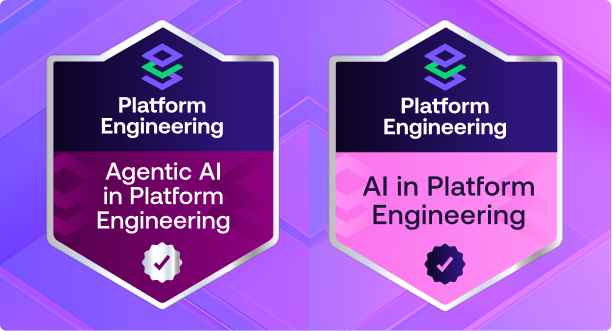
AI Bundle

Save 20% $1900 $1500
checkmark

For engineers and practitioners who want both the foundational infrastructure to support AI workloads and the advanced skills to build autonomous, agentic platform ecosystems.

You will get:
checkmark

How to design IDPs that support LLMs, RAG patterns, and GPU orchestration

checkmark

How to move beyond scripts to build autonomous agents using Claude Code.

checkmark

How to build intelligent SDLC automation incl. diagnostics for failed builds and infra remediation

checkmark

How to deploy conversational observability with human-in-the-loop oversight

checkmark

How to master governance & risk through security-by-design and audit trails for autonomous agents

In the end, this bundle is for those who want a complete, end-to-end path from building AI-ready platform foundations to deploy autonomous agents.
Enroll in AI Bundle


Desktop Mobile


Question Answer

Why this certification?

Unlike other programs, this certification blends technical, product, and business frameworks so you can actually build and scale a successful platform initiative, not just understand the tech.

What will I learn?

You will learn how to design and deploy agentic AI systems in CI/CD pipelines using GitHub Actions that can diagnose failures, evaluate release readiness, and autonomously propose or implement fixes.

How is it delivered?

Weekly on-demand sessions, Live QA sessions, self-paced modules, and an active Slack community of 500+ platform engineers.

How much time will it take?

About 12 hours in total, for 4 weeks, including optional homework. All sessions are recorded for flexible learning.

When will the instructor-led live sessions take place?

There will be 4 live sessions in total. Kickoff and Live QAs.

Is this course for me?

It’s for engineers, platform leads, and managers who want to align technical and business goals around platform engineering. No coding required.

I’m not an engineer, will I still benefit?

Absolutely. The course is designed for both technical and non-technical leaders. You’ll gain a shared framework for platform success across teams.

Do I get a certificate?

No. Once the course is finalized you'll earn a badge.

What if I can’t attend live?

No problem, every session is recorded and available on demand.

Can I pay by invoice or installments?

Yes, just contact us to arrange.

Can I buy now and start later?

Absolutely. Just contact us to arrange and join any future cohort.

Do I need any specific tools or technologies?

No special setup needed, just a laptop. A basic understanding of DevOps concepts (like Kubernetes or IaC) helps, but isn’t required.

Is coding required?

No. The course focuses on frameworks, adoption, and product thinking, not hands-on coding.

What technologies are discussed?

We reference tools like Terraform, Backstage or Kubernetes, but the focus is on best practices for platform design, not on tool-specific tutorials.

Do you offer private training for teams?

Yes, we run private team cohorts (virtual or in-person) tailored to your platform maturity and goals. Contact us for more information.


Curriculum

  • Live kickoff session
  • Module 1: Platform engineering pain points and the AI opportunity
  • The strategic role of platform engineering in the age of AI

  • From static scripts and CI/CD automation to agentic AI
  • See a live comparison of manual vs. AI-driven diagnosis
  • Module 2: Agentic AI fundamentals - how agents reason and act?
  • Learn core agent components (LLMs, memory, and tools)
  • Compare event-driven vs. polling architectures
  • Balance autonomous actions with human oversight
  • Module 3: Environment setup & your first agentic workflow
  • Set up an agentic runtime that responds to CI/CD events
  • Connect an AI agent to your pipeline's event stream and context
  • Trigger your first agent run and interpret its reasoning logs
  • Module 4: AI-powered diagnosis and remediation
  • Compare manual vs. AI-driven incident diagnosis
  • Build agents that read logs, reason about failures, and propose fixes
  • Define escalation boundaries: when the agent self-heals vs. asks a human
  • Module 5: Intelligent CI/CD & adaptive delivery
  • Move beyond pass/fail pipelines to AI-driven release decision
  • Automate rollback decisions using AI quality gates
  • Query pipeline state and release history using natural language
  • Module 6: Operational intelligence & conversational observability
  • Replace complex dashboards with AI anomaly detection
  • Check platform health via chat interfaces
  • Shift from reactive alerts to predictive management
  • Module 7: Multi-agent coordination & implementation strategy
  • Architect multi-agent systems for complex platform workflows
  • Handle agent conflicts, failures, and graceful degradation
  • Design a phased enterprise rollout with guardrails and audit trails
  • Module 8: Build your platform engineering agent
  • Wire together diagnosis, quality gates, and observability into one agent pipeline
  • Implement self-healing PRs with confidence thresholds
  • Shift your role from platform operator to AI supervisor
  • Course feedback survey

About this course

START DATE May 13
TIME COMMITMENT 12 hours
DURATION  4 weeks
PRICE $950
FORMAT Instructor-led, live and on-demand


What you'll learn

By the end of this certification, you’ll be able to:

checkmark Explain the shift from automation to agentic AI and articulate what makes an AI system truly “agentic”
checkmark Design agent-aware workflows in GitHub Actions, integrating LLMs with events, logs, APIs, and quality gates to create intelligent CI/CD pipelines
checkmark Build AI-powered diagnostic loops that ingest failure context, reason about root causes, and generate structured remediation proposals or self-healing fixes
checkmark Implement intelligent release decisions using multi-signal quality gates (test coverage, performance, security, cost) and generate auditable release rationale reports
checkmark Deploy your own end-to-end platform engineering agent, capable of diagnosing pipeline failures, evaluating release readiness, and autonomously opening a fix PR or escalating with structured context
 
salary callout
86%
report platform engineering
is essential to realizing AI's
business value


Who's it for?

Practitioners

DevOps and SREs who want to move beyond scripted automation to deploy autonomous agents that reason and adapt. You will learn to use GitHub Actions and Claude Code to automate complex diagnostic tasks, remediation, and self-healing workflows.

Platform Engineers

Platform Engineers looking to build next-gen agentic platforms that reduce cognitive load by integrating AI as a core capability. You’ll master building self-optimizing CI/CD pipelines and conversational observability interfaces to manage platform health at scale.

Leaders

Heads of platform and product owners tasked with driving the shift from reactive operations to intelligent platforms. Learn to manage architectural shifts toward agentic AI setups while ensuring governance, audit trails, and enterprise-scale risk mitigation.


8 MODULES  · LIVE SESSIONS INCLUDED

CURRICULUM

Complete the modules in order. Quizzes throughout.

MODULE 1 Platform engineering pain points and the AI opportunity
The strategic role of platform engineering in the age of AI
From static scripts and CI/CD automation to agentic AI
See a live comparison of manual vs. AI-driven diagnosis
MODULE 2 Agentic AI fundamentals - how agents reason and act?
Learn core agent components (LLMs, memory, and tools)
Compare event-driven vs. polling architectures
Balance autonomous actions with human oversight
MODULE 3 Environment setup & your first agentic workflow
Set up an agentic runtime that responds to CI/CD events
Connect an AI agent to your pipeline's event stream and context
Trigger your first agent run and interpret its reasoning logs
MODULE 4 AI-powered diagnosis and remediation
Compare manual vs. AI-driven incident diagnosis
Build agents that read logs, reason about failures, and propose fixes
Define escalation boundaries: when the agent self-heals vs. asks a human
MODULE 5 Intelligent CI/CD & adaptive delivery
Move beyond pass/fail pipelines to AI-driven release decision
Automate rollback decisions using AI quality gates
Query pipeline state and release history using natural language
MODULE 6 Operational intelligence & conversational observability
Replace complex dashboards with AI anomaly detection
Check platform health via chat interfaces
Shift from reactive alerts to predictive management
MODULE 7 Multi-agent coordination & implementation strategy
Architect multi-agent systems for complex platform workflows
Handle agent conflicts, failures, and graceful degradation
Design a phased enterprise rollout with guardrails and audit trails
MODULE 8 Build your platform engineering agent
Wire together diagnosis, quality gates, and observability into one agent pipeline
Implement self-healing PRs with confidence thresholds
Shift your role from platform operator to AI supervisor

LIVE SESSIONS

Cohort-based sessions with the instructor.

Join live for Q&A, guidance, and accountability. Dates shown here are the next cohort.
KICKOFF MAY 13 · 18:00 CET
LIVE Q&A #1 MAY 20 · 18:00 CET
LIVE Q&A #2 MAY 27 · 18:00 CET
LIVE Q&A #3 JUNE 3 · 18:00 CET


Meet your Instructor

Mallory Haigh

Ajay Chankramath

Founder, CEO @ Platformetrics

LinkedIn icon Connect with me on LinkedIn
  • bullet-icon Co-author of Effective Platform Engineering (Manning) and Domain-Driven Platform Engineering (Springer) and Author of Platform Engineer's Handbook (Packt)
  • bullet-icon Expertise in Platform engineering, GenAI in software delivery, Developer experience optimization, SRE, DevOps
  • bullet-icon 35+ years of experience in software development and delivery as a developer, architect and leader
  • bullet-icon Regular keynote presenter, workshop educator at Platform Con, DevOpsDays, Kube Days, All Day DevOps, and the DevOps Enterprise Summit (ELTS)
 
 
Desktop
Mobile


Alumni stories
 
Testimonials          
Name Image Position Text Linkedin LinkedinPost
Jay Moran SVP of Platform Engineering & Distinguished Engineer at Fiserv I don’t often feel certifications are too useful, but in this case beyond being not vendor specific, I think this is one certification that really helps define a “Platform Engineer” versus someone who does some of the many components of what goes into platform engineering… https://www.linkedin.com/in/jaycmoran/ https://www.linkedin.com/posts/jaycmoran_platformasaproduct-idp-platformengineering-activity-7364777833262448641-ku7Z/?utm_source=share&utm_medium=member_desktop&rcm=ACoAAB7W6ucBwi1gPqF5QCBe36ipfkH_n4Cityo
Daniel Palermi Senior Cloud Engineer at Serko The Platform Engineering Practitioner certification helped me understand the evolution of DevOps and engineering practices over the years. It clarified the concept of platform engineering and its true purpose. In my opinion, everyone working in an IT company should take this course, as it offers valuable lessons that span across all roles.

https://www.linkedin.com/in/daniel-palermi-4a5b881b/  
Brittany Lebel Senior Product Owner, Kinsale Insurance The Platform Engineering course was a transformative addition to my career. The content was well-structured, covering everything from designing Platform Engineering Maturity  Models to developing reference architectures that drive standardization and empower developers with seamless self-service capabilities. The hands-on lectures on Pocket IDP provided an in-depth exploration of the entire implementation process, diving into technical details and real-case scenarios. This comprehensive approach offered invaluable insights into how an IDP functions as a product and how it can efficiently support production workloads.Thanks to this course, I now have the expertise to contribute meaningfully to the development and enhancement of our Internal Developer Platform, enabling us to accelerate application delivery cycles.I highly recommend this course to anyone eager to elevate their engineering expertise and make a tangible impact in platform engineering! https://www.linkedin.com/in/brittany-lebel/  
Marc Schnitzius Service Lead Platform Engineering at Codecentric AG The Platform Engineering  Certified Practitioner course is a great guide for better understanding that the success of an internal developer platform is not just about making developers happy and shifting all their problems to a platform team. https://www.linkedin.com/in/marc-schnitzius/  
Rafael de Araujo Pires Global Director of Architecture at AB InBev The Platform Engineering Practitioner certification was more than concepts. It was a reflection on my own platform journey since 2022.The biggest lesson? Platforms are about people. It’s about listening, building trust, and reducing friction so teams can deliver value with autonomy. It’s about connecting culture, product, and technology, and showing that developer satisfaction can be as strategic as any infrastructure investment.Platform engineering isn’t just code: it’s people, trust, and real business impact. https://www.linkedin.com/in/rafaeldearaujop/  


Desktop Mobile


AI Bundle

Save 20% $1900 $1500
checkmark

For engineers and practitioners who want both the foundational infrastructure to support AI workloads and the advanced skills to build autonomous, agentic platform ecosystems.

You will get:
checkmark

How to design IDPs that support LLMs, RAG patterns, and GPU orchestration

checkmark

How to move beyond scripts to build autonomous agents using Claude Code.

checkmark

How to build intelligent SDLC automation incl. diagnostics for failed builds and infra remediation

checkmark

How to deploy conversational observability with human-in-the-loop oversight

checkmark

How to master governance & risk through security-by-design and audit trails for autonomous agents

In the end, this bundle is for those who want a complete, end-to-end path from building AI-ready platform foundations to deploy autonomous agents.
Enroll in AI Bundle


Desktop Mobile


Question Answer

Why this certification?

Unlike other programs, this certification blends technical, product, and business frameworks so you can actually build and scale a successful platform initiative, not just understand the tech.

What will I learn?

You will learn how to design and deploy agentic AI systems in CI/CD pipelines using GitHub Actions that can diagnose failures, evaluate release readiness, and autonomously propose or implement fixes.

How is it delivered?

Weekly on-demand sessions, Live QA sessions, self-paced modules, and an active Slack community of 500+ platform engineers.

How much time will it take?

About 12 hours in total, for 4 weeks, including optional homework. All sessions are recorded for flexible learning.

When will the instructor-led live sessions take place?

There will be 4 live sessions in total. Kickoff and Live QAs.

Is this course for me?

It’s for engineers, platform leads, and managers who want to align technical and business goals around platform engineering. No coding required.

I’m not an engineer, will I still benefit?

Absolutely. The course is designed for both technical and non-technical leaders. You’ll gain a shared framework for platform success across teams.

Do I get a certificate?

No. Once the course is finalized you'll earn a badge.

What if I can’t attend live?

No problem, every session is recorded and available on demand.

Can I pay by invoice or installments?

Yes, just contact us to arrange.

Can I buy now and start later?

Absolutely. Just contact us to arrange and join any future cohort.

Do I need any specific tools or technologies?

No special setup needed, just a laptop. A basic understanding of DevOps concepts (like Kubernetes or IaC) helps, but isn’t required.

Is coding required?

No. The course focuses on frameworks, adoption, and product thinking, not hands-on coding.

What technologies are discussed?

We reference tools like Terraform, Backstage or Kubernetes, but the focus is on best practices for platform design, not on tool-specific tutorials.

Do you offer private training for teams?

Yes, we run private team cohorts (virtual or in-person) tailored to your platform maturity and goals. Contact us for more information.


Curriculum

  • Live kickoff session
  • Module 1: Platform engineering pain points and the AI opportunity
  • The strategic role of platform engineering in the age of AI
  • From static scripts and CI/CD automation to agentic AI
  • See a live comparison of manual vs. AI-driven diagnosis
  • Module 2: Agentic AI fundamentals - how agents reason and act?
  • Learn core agent components (LLMs, memory, and tools)
  • Compare event-driven vs. polling architectures
  • Balance autonomous actions with human oversight
  • Module 3: Environment setup & your first agentic workflow
  • Set up an agentic runtime that responds to CI/CD events
  • Connect an AI agent to your pipeline's event stream and context
  • Trigger your first agent run and interpret its reasoning logs
  • Module 4: AI-powered diagnosis and remediation
  • Compare manual vs. AI-driven incident diagnosis
  • Build agents that read logs, reason about failures, and propose fixes
  • Define escalation boundaries: when the agent self-heals vs. asks a human
  • Module 5: Intelligent CI/CD & adaptive delivery
  • Move beyond pass/fail pipelines to AI-driven release decision
  • Automate rollback decisions using AI quality gates
  • Query pipeline state and release history using natural language
  • Module 6: Operational intelligence & conversational observability
  • Replace complex dashboards with AI anomaly detection
  • Check platform health via chat interfaces
  • Shift from reactive alerts to predictive management
  • Module 7: Multi-agent coordination & implementation strategy
  • Architect multi-agent systems for complex platform workflows
  • Handle agent conflicts, failures, and graceful degradation
  • Design a phased enterprise rollout with guardrails and audit trails
  • Module 8: Build your platform engineering agent
  • Wire together diagnosis, quality gates, and observability into one agent pipeline
  • Implement self-healing PRs with confidence thresholds
  • Shift your role from platform operator to AI supervisor
  • Course feedback survey