-
Welcome to the course
- Module 1: Introduction: Why Kubernetes cluster lifecycle management matters
-
Introduction: Why Kubernetes cluster lifecycle management matters
-
A short Kubernetes history
-
Deploying software: before and after Kubernetes
-
The reality of Kubernetes clusters today
-
Multi-cluster architecture patterns
-
Kubernetes clusters in platform engineering
-
Challenges: The real-world pressure cooker
-
Snowflakes and configuration drift
-
Introducing cluster lifecycle management
- Module 2: Building clusters the declarative way
-
Module 2: Building clusters the declarative way
-
The full tech stack of a Kubernetes cluster
-
Different clusters? Different setups!
-
Keeping dev/test close to production
-
Beware of unintended interactions
-
Achieving full-stack visibility and transparency
-
The politics of infra and platform teams
-
How do you build a Kubernetes cluster?
-
How do you get the full payload deployed?
-
Intentionality is key
- Module 3: Day 2 operations
-
Module 3: Day 2 operations
-
Day 2 challenges
-
Scheduled vs. event-driven Day 2 tasks
-
Operational challenges at scale
-
Observability: Your window into Day 2 reality
-
Automation and declarative control
-
AI and its current limitations
-
Cost management
- Module 4: Multi-cluster governance, policy and security
-
Module 4: Multi-cluster governance, policy and security
-
Multi-cluster architectures: Benefits
-
Multi-cluster architectures: Challenges
-
Trade-offs: autonomy vs. control
-
How to make it manageable
-
Security best practices at fleet scale
-
Course Feedback Survey
- Wrap-up
-
It's a wrap - key takeaways
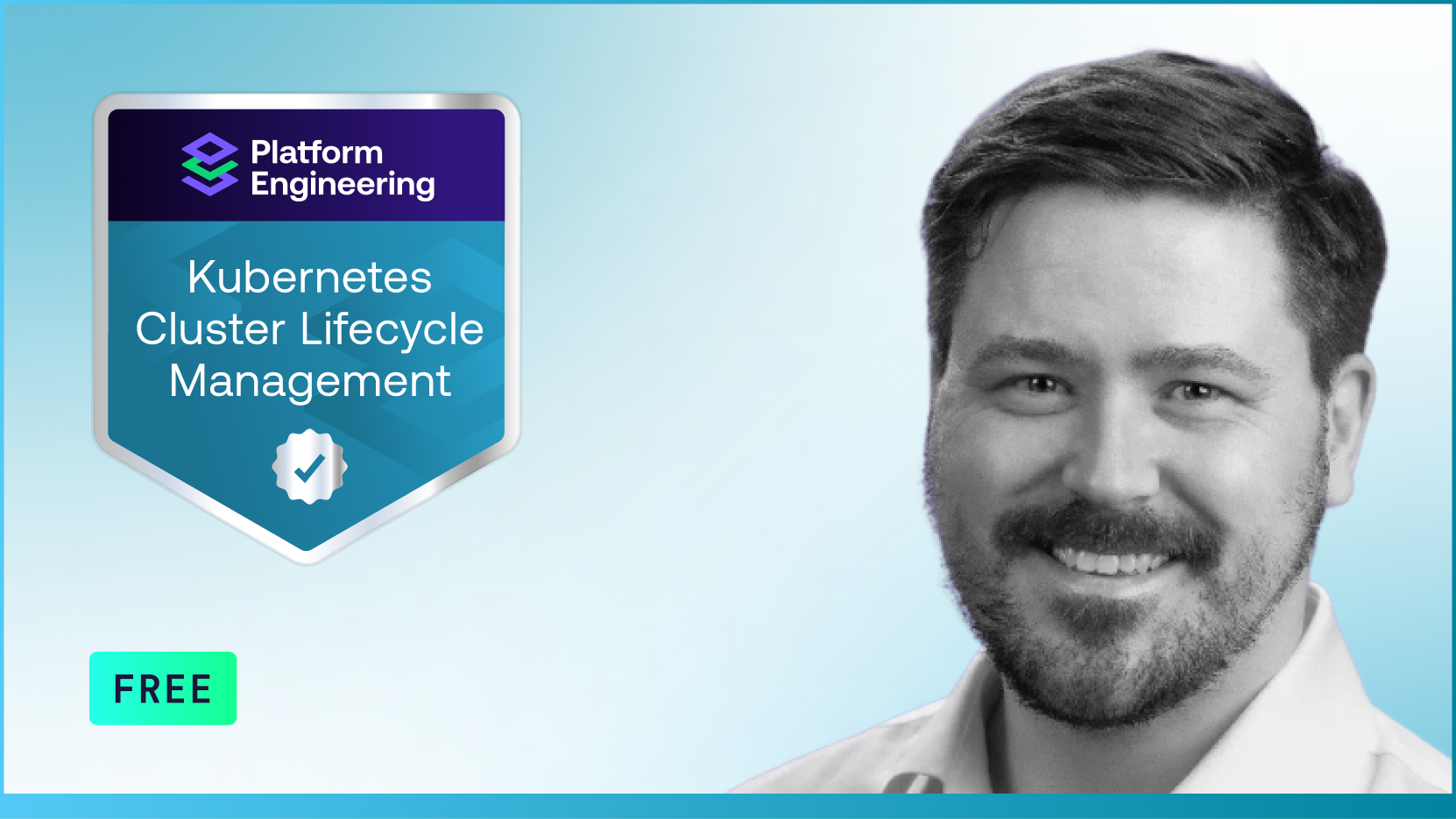
Kubernetes Cluster Lifecycle Management in Platform Engineering
Learn how to manage Kubernetes clusters across their full lifecycle. This course covers declarative management, Day 2 operations, and governance practices to reduce toil and scale platform reliability across teams
DURATION 2 hours
PRICE Free
FORMAT On-demand
What you'll learn
During this course, you'll learn:
 Establish declarative Kubernetes cluster lifecycle management practices Manage Kubernetes clusters from provisioning through Day 2 operations at fleet scale Design and operate multi-cluster architectures with clear governance and control Use automation, GitOps, and policy-as-code to enable safe self-service for application teams
Curriculum
4 MODULESMODULE 1
Why Kubernetes cluster lifecycle management matters

 A short Kubernetes history Deploying software: before and after Kubernetes The reality of Kubernetes clusters today Multi-cluster architecture patterns Kubernetes clusters in platform engineering Challenges: The real-world pressure cooker Snowflakes and configuration drift Introducing cluster lifecycle management
MODULE 2
Building clusters the declarative way
The full tech stack of a Kubernetes cluster Different clusters? Different setups! Keeping dev/test close to production Beware of unintended interactions Achieving full-stack visibility and transparency The politics of infra and platform teams How do you build a Kubernetes cluster? How do you get the full payload deployed? Intentionality is keyMODULE 3
Day 2 operations
Day 2 challenges Scheduled vs. event-driven Day 2 tasks Operational challenges at scale Observability: Your window into Day 2 reality Automation and declarative control AI and its current limitations Cost managementMODULE 4
Multi-cluster governance, policy and security
Multi-cluster architectures: Benefits Multi-cluster architectures: Challenges Trade-offs: autonomy vs. control How to make it manageable Security best practices at fleet scaleMeet your Instructor
Ant Newman
Course instructor and Product @ SpectroCloud
- Technology speaker and storyteller with deep experience shaping platform and cloud narratives for senior technical and business audiences
- Thought-leadership specialist who turns large, messy problem spaces into clear points of view that resonate with engineers, leaders, and executives
- Journalist-turned marketer, interviewer, and podcast host who connects platform engineering decisions to real organizational and business outcomes
|
Desktop
|
Mobile |
 |
|
| Desktop | Mobile |
 |
|
| Desktop | Mobile |
 |
|