-
Welcome to the course
- Module 1: Observability foundations for platform engineers
-
Module 1: Observability foundations for platform engineers
-
The origins of observability
-
Observability or monitoring?
-
The different types of telemetry
-
Why semantic conventions matter
-
Why should platform engineers care about observability?
-
Observability and Platform-as-a-Product
- Module 2: The platform engineer's dual role in observability
-
Module 2: The platform engineer's dual role in observability
-
The two roles of a platform engineer in observability
-
The main challenges in platform observability
-
A day in the life: Incident flow
-
The superpower of correlation
- Module 3: The open source observability tool landscape
-
Module 3: The open source observability tool landscape
-
The OSS observability puzzle
-
Introducing OpenTelemetry
-
Prometheus, Jaeger, OpenSearch, Perses: Metrics for modern systems
-
Demo: Observability tools in action
-
PromQL: the platform engineer’s language
-
OSS Tools: 3 signals, 3 interfaces
-
OSS vs. Open Core: choose the right model
- Module 4: Demystifying OpenTelemetry
-
Module 4: Demystifying OpenTelemetry
-
OpenTelemetry as the standard
-
Why OpenTelemetry?
-
Spans and traces
-
Logs in OpenTelemetry
-
Metrics in OpenTelemetry
-
Resources
-
Semantic conventions = consistency
-
The OpenTelemetry Collector: Your pipeline engine
-
OpenTelemetry Operator and auto-instrumentation
- Module 5: Simplifying observability with automation and standards
-
Module 5: Simplifying observability with automation and standards
-
How to scale observability
-
GitOps for dashboards and alerts
-
Auto-instrumentation with OpenTelemetry
-
Data control for platform engineers
-
Provide defaults, allow overrides
-
Observability becomes infrastructure
-
Build the platform, not the dashboard!
-
Final demo
-
Course Feedback Survey
- Wrap-up
-
It's a wrap - Key takeaways
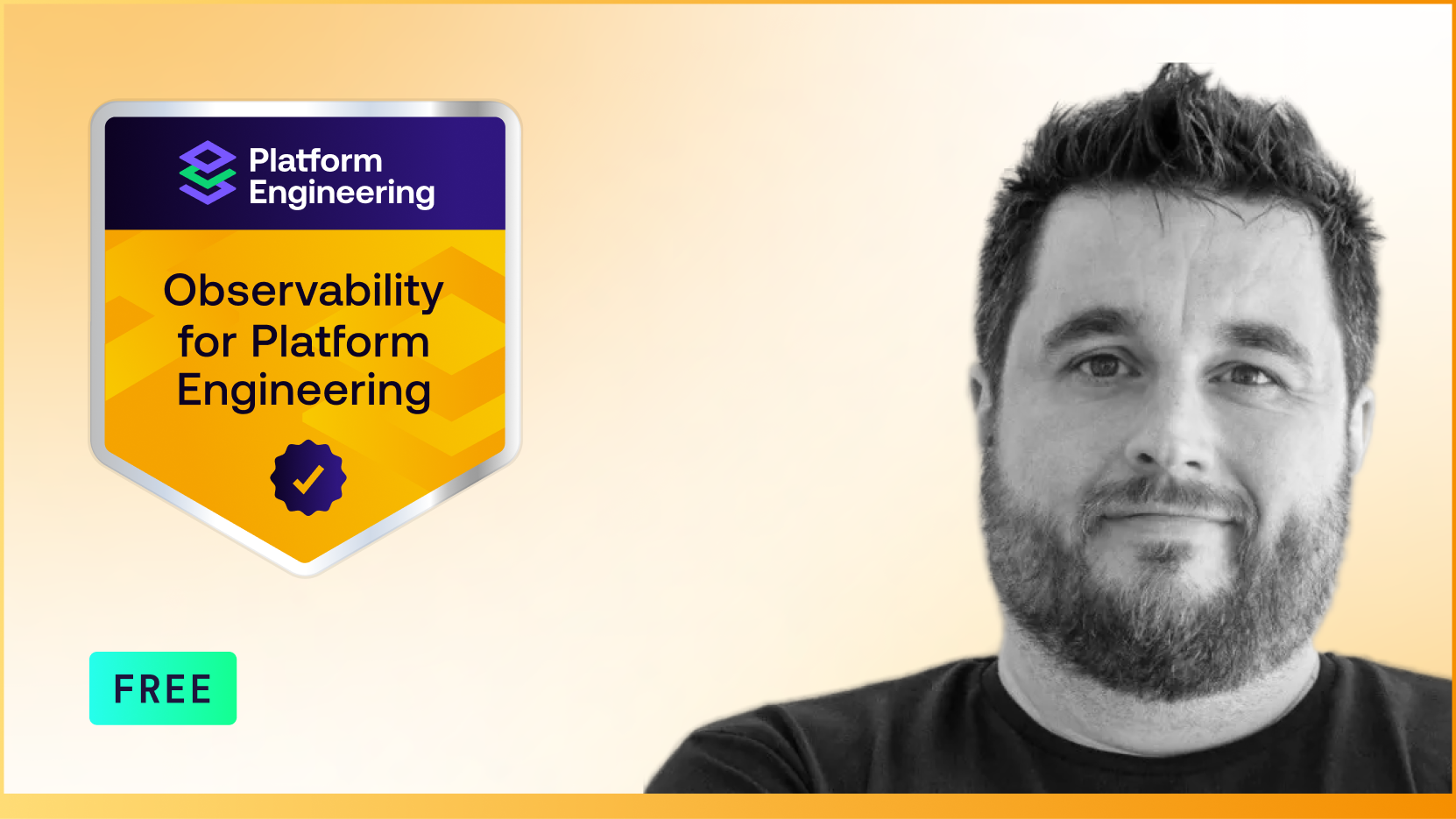
Observability for Platform Engineering
Learn how to make observability a core platform capability. This course covers OpenTelemetry, automation, and open standards to help you design reliable signals teams can trust across distributed systems
DURATION 2 hours
PRICE Free
FORMAT On-demand
What you'll learn
During this course, you'll learn:
 Understand modern observability principles and why observability is a core responsibility for platform engineers Design observability as a platform capability that supports both infrastructure and application teams Use automation and open standards to simplify telemetry collection and reduce effort for application teams Address real-world observability challenges in distributed, multi-cluster, and multi-tenant environments
Curriculum
4 MODULESMODULE 1
Observability foundations for platform engineers

 The origins of observability Observability or monitoring? The different types of telemetry Why semantic conventions matter Why should platform engineers care about observability? Observability and Platform-as-a-Product
MODULE 2
The platform engineer's dual role in observability
The two roles of a platform engineer in observability The main challenges in platform observability A day in the life: Incident flow The superpower of correlationMODULE 3
The open source observability tool landscape
The OSS observability puzzle Introducing OpenTelemetry Prometheus, Jaeger, OpenSearch, Perses: Metrics for modern systems Demo: Observability tools in action PromQL: the platform engineer’s language OSS Tools: 3 signals, 3 interfaces OSS vs. Open Core: choose the right modelMODULE 4
Demystifying OpenTelemetry
OpenTelemetry as the standard Why OpenTelemetry? Spans and traces Logs in OpenTelemetry Metrics in OpenTelemetry Semantic conventions = consistency The OpenTelemetry Collector: Your pipeline engine OpenTelemetry Operator and auto-instrumentationMODULE 5
Simplifying observability with automation and standards
How to scale observability GitOps for dashboards and alerts Auto-instrumentation with OpenTelemetry Data control for platform engineers Provide defaults, allow overrides Observability becomes infrastructure Build the platform, not the dashboard! Final demoMeet your Instructors
Kasper Borg Nissen
Course instructor and Director of Product Marketing @ Dash0
 Connect with me on LinkedIn
- Platform engineer and observability nerd who genuinely enjoys making complex systems observable
- Deep into OpenTelemetry, open standards, and reducing observability pain with good defaults
- Speaker, course instructor and OSS advocate who turns telemetry chaos into something teams can actually work with

Michele Mancioppi
Course instructor and Chief Architect @ Dash0
Connect with me on LinkedIn
- Platform engineer and observability veteran with a decade of hands-on experience, "Product Manager by day, Engineer by night"
- Deep into OpenTelemetry and open standards, and contributor of tools like OTelBin to make collector configs actually manageable
- Speaker, course instructor, and OSS advocate who turns telemetry complexity into something teams can reason about
|
Desktop
|
Mobile |
 |
|
| Desktop | Mobile |
 |
|
| Desktop | Mobile |
 |
|