PlatformEngineering.org My Courses FAQs

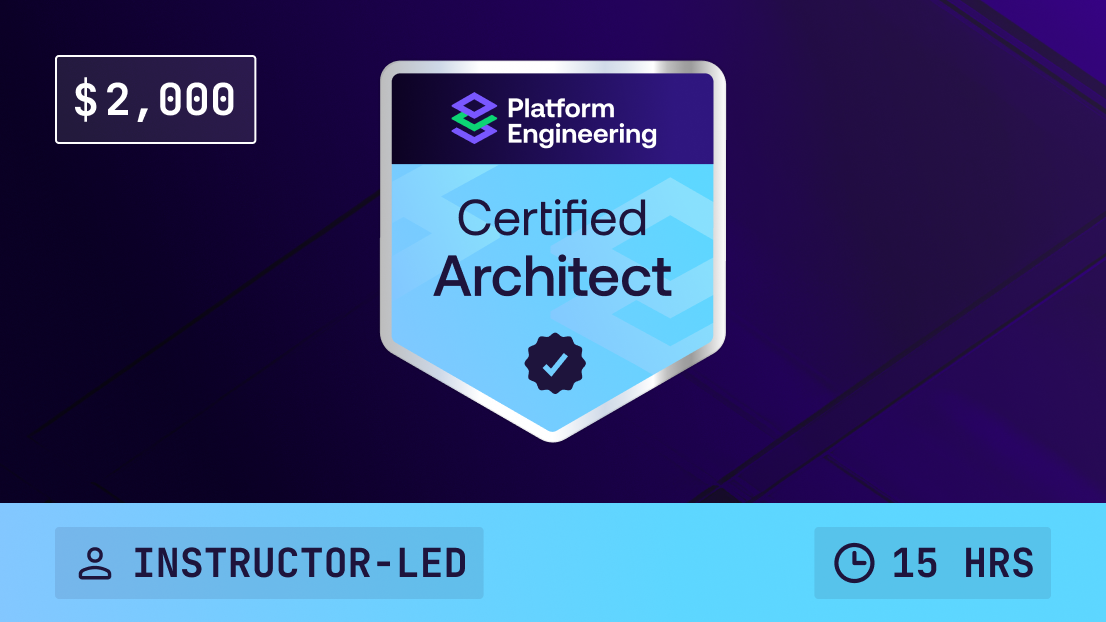
Platform Engineering Certified Architect (November)

Learn the architectural foundations of any scalable, reliable and secure Kubernetes-based platform.

rate limit

Code not recognized.

About this course

Page Description

👉 Understand the architectural foundations of any scalable, reliable and secure Kubernetes-based platform
👉 Master compliance and security by design implementing best practices like Policy as Code from the get go
👉 Get technical hands-on experience in instructor led sessions with platform engineering technical experts

Curriculum Hubspot Form
hubspot

Who's it for?

person_check
Architects

Architects who want to lay platform foundations like Policy as Code, RBAC, zero trust right

person_check
Platform engineers

Platform engineers who want to level up their architecture, K8s, Policy as Code and security skills

person_check
Security engineers

Security engineers who want to level up their DevSecOps best practices for K8s platforms
 
 
This course on Platform Engineering Certified Architect is specifically designed for architects, Platform Engineers and DevSecOps engineers.

The course aims to equip participants with all they need on how master the architectural foundations of modern Kubernetes-based Internal Developer Platforms.
Students will learn the strategic need of security and compliance patterns and get technical hands-on experience in instructor led sessions with platform engineering thought leaders and technical experts.
The curriculum covers key areas such as Policy-as-code (OPA/Gatekeeper/Kyverno), compliance and security patterns, how to build developer facing APIs and CLIs, and platform automations with Kubernetes Operators. The course will conclude with building a web UI and the presentation of a capstone project pulling it all together.
 
The sessions (unless stated otherwise) take place at 6:30 pm CET/12:30 pm ET . But remember - all recordings are shared, so it’s easy to take the course asynchronously.

Prerequisites
For successful participation of the Platform Engineering Certified Architect course, students are expected to have fundamental understanding of:
  • Cloud native , i.e. landscape and tooling built around Kubernetes
  • Kubernetes : Deploying workloads, using kubectl, managing namespaces/resources
  • Git & GitHub : Comfortable with branching, pull requests, and CI/CD workflows
  • Containerization: Docker build/run basics
  • CLI tools proficiency (kubectl, gcloud, or similar)
  • Policy as Code Tools: Exposure to OPA, Gatekeeper, or Kyverno (basic rules)
  • Running CI/CD pipelines (GitHub Actions / Jenkins / GitLab CI)
  • Dev Tools Setup: Local IDE (VS Code/JetBrains), API testing ( curl/Postman ), terminal basics


Instructors

(Instructor content will be generated here.)
 
 
What's included
 
8 modules

Over 15 hours of both self-paced and instructor-led content. Proven industry frameworks and best practice templates to help you advance your platform engineering practice.

Guest lectures

Bonus lectures for leading industry experts

Live support

Weekly office hours with instructors and Slack support.

Community access

Join a network of 500+ platform engineering practitioners, leaders and program alumni. Get access to community-only premium content and platform deep dives.


Testimonials
 
Testimonials        
Name Image Position Text Linkedin
Jay Moran SVP of Platform Engineering & Distinguished Engineer I don’t often feel certifications are too useful, but in this case beyond being not vendor specific, I think this is one certification that really helps define a “Platform Engineer” versus someone who does some of the many components of what goes into platform engineering… https://www.linkedin.com/in/jaycmoran/
Marc Mangus Principal Consultant @ Red Hat The evolution and convergence of DevSecOps, SRE, and Agile principles are top of mind with IT executives and where the industry is headed, and this course gives a great deal of information on the current view of these ideas. It gave me the confidence to talk about PE with more authority with my customers, and more importantly to ask intelligent questions about what they are doing now and where they want to go in the future. https://www.linkedin.com/in/marcmangus/
Giovanna Faso VP Engineering @ Dashlane As a VP of Engineering focusing on Platform and Operations, I needed a structured approach to onboarding engineers to platform teams, equipping them with the right methods and techniques to prioritize effectively and deliver high-value developer tools. The Platform Engineering Foundations course provided exactly that—offering a clear framework for building self-service platforms, reducing friction for developers, and aligning platform work with business impact.
One of the key strengths of the course was its accessibility across different seniority levels. It worked equally well for Staff Engineers, Engineering Managers, and even Junior Engineers eager to understand the criticality of building platforms for adoption. The balance between theoretical concepts and practical application was excellent, ensuring that our team not only learned best practices but could immediately apply them to real-world challenges.
Additionally, the course structure allowed subject matter experts to make valuable guest appearances, offering deep insights from industry leaders. We also took the course together as a team, which was a game-changer. Preparing for the homework sessions collaboratively helped us stay accountable throughout the 10 weeks, reinforcing learning and driving meaningful discussions.
I highly recommend this course to any engineering leader looking to empower their platform teams and create a sustainable, developer-first platform strategy - Giovanna Faso, Platform Engineering Leader
https://www.linkedin.com/in/fasogiovanna/
 
Desktop Mobile


FAQs table (leave empty to use default Q&As from FAQ page) 

Question Answer

Why this certification?

Unlike other programs, this certification blends technical and product frameworks so you can actually build and scale a successful platform initiative, by laying security and compliance foundations for your Kubernetes-based platform.

What will I learn?

This course teaches participants to master Kubernetes-based Internal Developer Platforms, focusing on architectural foundations.

You will learn how to implement security and compliance by design, gain hands-on technical experience, and dive deep into topics like Policy-as-code (OPA/Gatekeeper/Kyverno), developer-facing APIs/CLIs, and Kubernetes Operators.

How is it delivered?

Live weekly sessions (recorded if you can’t join), self-paced modules, guest lectures, and an active Slack community of 500+ platform engineers.

How much time will it take?

About 3 hours per week for 5 weeks, plus optional homework. All sessions are recorded for flexible learning.

When will the instructor-led live sessions take place? >

The sessions (unless stated otherwise) take place on Thursdays at 6:30 pm CET/12:30 pm ET plus optional Live Q&A sessions on Mondays, same time. But remember - all recordings are shared, so it’s easy to take the course asynchronously.

Is this course for me?

It’s for architects, platform engineers and security engineers who want to master compliance and security by design.

Successful participation requires fundamental understanding of cloud-native concepts (Kubernetes landscape/tooling), Kubernetes (workload deployment, kubectl, namespaces/resources), Git & GitHub (branching, pull requests, CI/CD), containerization (Docker basics), CLI tools (kubectl, gcloud), Policy as Code (OPA, Gatekeeper, Kyverno basic rules), CI/CD pipelines (GitHub Actions, Jenkins, GitLab CI), and dev tools (local IDE, API testing, terminal).

Do I get a certificate?

Yes. By doing an exam after the course, you’ll earn a verified digital certificate and LinkedIn badge recognized by leading platform teams.

What if I can’t attend live?

No problem, every session is recorded and available on demand.

What’s the exam like?

60 minutes, 50 multiple-choice questions, proctored. Passing score: 75%. You’ll have 2 attempts within 6 months of completing the course.

Can I pay by invoice or installments?

Yes, just contact us to arrange.

Can I buy now and start later?

Absolutely. Just contact us to arrange and join any future cohort.

Do I need any specific tools or technologies?

No special setup needed, just a laptop.
We will provide all tech and tools needed through a Cloud Development Environment (CDE). This guarantees a consistent experience for all students, eliminating "works on my machine" issues.

Is coding required?

Yes, at least if you want to do the optional homework exercises.

What technologies are discussed?

Cloud-native concepts (Kubernetes landscape/tooling), Kubernetes (workload deployment, kubectl, namespaces/resources), Git & GitHub (branching, pull requests, CI/CD), containerization (Docker), CLI tools (kubectl, gcloud), Policy as Code (OPA, Gatekeeper, Kyverno), Terraform, CI/CD pipelines (GitHub Actions, Jenkins, GitLab CI), ArgoCD, dev tools (local IDE, API testing), portals like Backstage.

Do you offer private training for teams?

Yes, we run private team cohorts (virtual or in-person) tailored to your platform maturity and goals. Contact us for more information.

Curriculum

  • Module 1: Foundations and environment setup - Nov 13 (live)
  • Nov 13 - Live: Foundations and environment setup
  • Recording - Foundations and environment setup
  • Intro to the course framework
  • Reference architecture
  • Environment setup (Coder, Kind, K8s)
  • Verify foundation (K8s, Grafana, Gatekeeper)
  • Live Q&A session - Nov 17
  • Nov 17 - Live Q&A
  • Module 2: Policy-as-Code: Compliance at the point of change (on demand)
  • Introduction to Policy as Code
  • Introduction to DevSecOps & governance
  • Implement OPA/Gatekeeper policy engine
  • Block images with critical Common Vulnerabilities and Exposures (CVEs)
  • Use compliance at point of change
  • Module 3: Secure foundations (Falco + Runtime security) - Nov 20 (live)
  • Nov 20 - Live: Secure foundations (Falco + Runtime security)
  • Recording - Secure foundations (Falco + Runtime security)
  • Zero trust fundamentals
  • Deploy Falco for runtime security (eBPF)
  • Implement service identity (SPIFFE/SPIRE)
  • Integrate Gatekeeper (prevent) + Falco (detect)
  • Live Q&A session - Nov 24
  • Nov 24 - Live Q&A
  • Module 4: Building developer facing platform APIs (on demand)
  • How APIs function as a product interface and abstraction layer
  • Design Teams API for self-service onboarding
  • Implement design-first (OpenAPI/Swagger)
  • Apply progressive disclosure principles
  • Module 5: Command line interfaces for platform operations (on demand)
  • Role of CLIs for speed & scripting
  • How CLIs function as an abstraction layer
  • Develop a Python-based Teams CLI (teams-cli)
  • Enable automation via scripting/CI/CD
  • Live Q&A session - Dec 1
  • Dec 1 - Live Q&A
  • Module 6: Platform automation with Kubernetes Operators - Dec 4 (live)
  • Dec 4 - Live: Platform automation with Kubernetes Operators
  • Recording - Platform automation with Kubernetes Operators
  • Understand the Operator pattern
  • Build an Operator reconciliation loop
  • Automate namespace lifecycle
  • Configure Operator security (RBAC/limits)
  • Module 7: Full-stack platform experience & capstone introduction (on demand)
  • Deploy final Teams Web Interface (Angular)
  • Verify end-to-end flow (UI->API->Operator)
  • Compare custom UIs vs commercial and open source portals (Backstage)
  • Introduce capstone project requirements
  • Live Q&A session - Dec 8
  • Dec 8 - Live Q&A
  • Module 8: Capstone demonstration & retrospective - Dec 11 (live)
  • Dec 11 - Live: Capstone demonstration & retrospective
  • Recording - Capstone demonstration & retrospective
  • Conduct individual capstone demos
  • Verify security gates (Gatekeeper/Falco)
  • Review key takeaways & best practices
  • Discuss next steps (GitOps, authentication)
  • Feedback survey
  • Exam info

About this course

Page Description

👉 Understand the architectural foundations of any scalable, reliable and secure Kubernetes-based platform
👉 Master compliance and security by design implementing best practices like Policy as Code from the get go
👉 Get technical hands-on experience in instructor led sessions with platform engineering technical experts

Curriculum Hubspot Form

hubspot

Who's it for?

person_check
Architects

Architects who want to lay platform foundations like Policy as Code, RBAC, zero trust right

person_check
Platform engineers

Platform engineers who want to level up their architecture, K8s, Policy as Code and security skills

person_check
Security engineers

Security engineers who want to level up their DevSecOps best practices for K8s platforms


This course on Platform Engineering Certified Architect is specifically designed for architects, Platform Engineers and DevSecOps engineers.

The course aims to equip participants with all they need on how master the architectural foundations of modern Kubernetes-based Internal Developer Platforms.
Students will learn the strategic need of security and compliance patterns and get technical hands-on experience in instructor led sessions with platform engineering thought leaders and technical experts.
The curriculum covers key areas such as Policy-as-code (OPA/Gatekeeper/Kyverno), compliance and security patterns, how to build developer facing APIs and CLIs, and platform automations with Kubernetes Operators. The course will conclude with building a web UI and the presentation of a capstone project pulling it all together.
 
The sessions (unless stated otherwise) take place at 6:30 pm CET/12:30 pm ET . But remember - all recordings are shared, so it’s easy to take the course asynchronously.

Prerequisites
For successful participation of the Platform Engineering Certified Architect course, students are expected to have fundamental understanding of:
  • Cloud native , i.e. landscape and tooling built around Kubernetes
  • Kubernetes : Deploying workloads, using kubectl, managing namespaces/resources
  • Git & GitHub : Comfortable with branching, pull requests, and CI/CD workflows
  • Containerization: Docker build/run basics
  • CLI tools proficiency (kubectl, gcloud, or similar)
  • Policy as Code Tools: Exposure to OPA, Gatekeeper, or Kyverno (basic rules)
  • Running CI/CD pipelines (GitHub Actions / Jenkins / GitLab CI)
  • Dev Tools Setup: Local IDE (VS Code/JetBrains), API testing ( curl/Postman ), terminal basics


Instructors

(Instructor content will be generated here.)
 
 
What's included
 
8 modules

Over 15 hours of both self-paced and instructor-led content. Proven industry frameworks and best practice templates to help you advance your platform engineering practice.

Guest lectures

Bonus lectures for leading industry experts

Live support

Weekly office hours with instructors and Slack support.

Community access

Join a network of 500+ platform engineering practitioners, leaders and program alumni. Get access to community-only premium content and platform deep dives.


Testimonials
 
Testimonials        
Name Image Position Text Linkedin
Jay Moran SVP of Platform Engineering & Distinguished Engineer I don’t often feel certifications are too useful, but in this case beyond being not vendor specific, I think this is one certification that really helps define a “Platform Engineer” versus someone who does some of the many components of what goes into platform engineering… https://www.linkedin.com/in/jaycmoran/
Marc Mangus Principal Consultant @ Red Hat The evolution and convergence of DevSecOps, SRE, and Agile principles are top of mind with IT executives and where the industry is headed, and this course gives a great deal of information on the current view of these ideas. It gave me the confidence to talk about PE with more authority with my customers, and more importantly to ask intelligent questions about what they are doing now and where they want to go in the future. https://www.linkedin.com/in/marcmangus/
Giovanna Faso VP Engineering @ Dashlane As a VP of Engineering focusing on Platform and Operations, I needed a structured approach to onboarding engineers to platform teams, equipping them with the right methods and techniques to prioritize effectively and deliver high-value developer tools. The Platform Engineering Foundations course provided exactly that—offering a clear framework for building self-service platforms, reducing friction for developers, and aligning platform work with business impact.
One of the key strengths of the course was its accessibility across different seniority levels. It worked equally well for Staff Engineers, Engineering Managers, and even Junior Engineers eager to understand the criticality of building platforms for adoption. The balance between theoretical concepts and practical application was excellent, ensuring that our team not only learned best practices but could immediately apply them to real-world challenges.
Additionally, the course structure allowed subject matter experts to make valuable guest appearances, offering deep insights from industry leaders. We also took the course together as a team, which was a game-changer. Preparing for the homework sessions collaboratively helped us stay accountable throughout the 10 weeks, reinforcing learning and driving meaningful discussions.
I highly recommend this course to any engineering leader looking to empower their platform teams and create a sustainable, developer-first platform strategy - Giovanna Faso, Platform Engineering Leader
https://www.linkedin.com/in/fasogiovanna/
 
Desktop Mobile


FAQs table (leave empty to use default Q&As from FAQ page) 

Question Answer

Why this certification?

Unlike other programs, this certification blends technical and product frameworks so you can actually build and scale a successful platform initiative, by laying security and compliance foundations for your Kubernetes-based platform.

What will I learn?

This course teaches participants to master Kubernetes-based Internal Developer Platforms, focusing on architectural foundations.

You will learn how to implement security and compliance by design, gain hands-on technical experience, and dive deep into topics like Policy-as-code (OPA/Gatekeeper/Kyverno), developer-facing APIs/CLIs, and Kubernetes Operators.

How is it delivered?

Live weekly sessions (recorded if you can’t join), self-paced modules, guest lectures, and an active Slack community of 500+ platform engineers.

How much time will it take?

About 3 hours per week for 5 weeks, plus optional homework. All sessions are recorded for flexible learning.

When will the instructor-led live sessions take place? >

The sessions (unless stated otherwise) take place on Thursdays at 6:30 pm CET/12:30 pm ET plus optional Live Q&A sessions on Mondays, same time. But remember - all recordings are shared, so it’s easy to take the course asynchronously.

Is this course for me?

It’s for architects, platform engineers and security engineers who want to master compliance and security by design.

Successful participation requires fundamental understanding of cloud-native concepts (Kubernetes landscape/tooling), Kubernetes (workload deployment, kubectl, namespaces/resources), Git & GitHub (branching, pull requests, CI/CD), containerization (Docker basics), CLI tools (kubectl, gcloud), Policy as Code (OPA, Gatekeeper, Kyverno basic rules), CI/CD pipelines (GitHub Actions, Jenkins, GitLab CI), and dev tools (local IDE, API testing, terminal).

Do I get a certificate?

Yes. By doing an exam after the course, you’ll earn a verified digital certificate and LinkedIn badge recognized by leading platform teams.

What if I can’t attend live?

No problem, every session is recorded and available on demand.

What’s the exam like?

60 minutes, 50 multiple-choice questions, proctored. Passing score: 75%. You’ll have 2 attempts within 6 months of completing the course.

Can I pay by invoice or installments?

Yes, just contact us to arrange.

Can I buy now and start later?

Absolutely. Just contact us to arrange and join any future cohort.

Do I need any specific tools or technologies?

No special setup needed, just a laptop.
We will provide all tech and tools needed through a Cloud Development Environment (CDE). This guarantees a consistent experience for all students, eliminating "works on my machine" issues.

Is coding required?

Yes, at least if you want to do the optional homework exercises.

What technologies are discussed?

Cloud-native concepts (Kubernetes landscape/tooling), Kubernetes (workload deployment, kubectl, namespaces/resources), Git & GitHub (branching, pull requests, CI/CD), containerization (Docker), CLI tools (kubectl, gcloud), Policy as Code (OPA, Gatekeeper, Kyverno), Terraform, CI/CD pipelines (GitHub Actions, Jenkins, GitLab CI), ArgoCD, dev tools (local IDE, API testing), portals like Backstage.

Do you offer private training for teams?

Yes, we run private team cohorts (virtual or in-person) tailored to your platform maturity and goals. Contact us for more information.

Curriculum

  • Module 1: Foundations and environment setup - Nov 13 (live)
  • Nov 13 - Live: Foundations and environment setup
  • Recording - Foundations and environment setup
  • Intro to the course framework
  • Reference architecture
  • Environment setup (Coder, Kind, K8s)
  • Verify foundation (K8s, Grafana, Gatekeeper)
  • Live Q&A session - Nov 17
  • Nov 17 - Live Q&A
  • Module 2: Policy-as-Code: Compliance at the point of change (on demand)
  • Introduction to Policy as Code
  • Introduction to DevSecOps & governance
  • Implement OPA/Gatekeeper policy engine
  • Block images with critical Common Vulnerabilities and Exposures (CVEs)
  • Use compliance at point of change
  • Module 3: Secure foundations (Falco + Runtime security) - Nov 20 (live)
  • Nov 20 - Live: Secure foundations (Falco + Runtime security)
  • Recording - Secure foundations (Falco + Runtime security)
  • Zero trust fundamentals
  • Deploy Falco for runtime security (eBPF)
  • Implement service identity (SPIFFE/SPIRE)
  • Integrate Gatekeeper (prevent) + Falco (detect)
  • Live Q&A session - Nov 24
  • Nov 24 - Live Q&A
  • Module 4: Building developer facing platform APIs (on demand)
  • How APIs function as a product interface and abstraction layer
  • Design Teams API for self-service onboarding
  • Implement design-first (OpenAPI/Swagger)
  • Apply progressive disclosure principles
  • Module 5: Command line interfaces for platform operations (on demand)
  • Role of CLIs for speed & scripting
  • How CLIs function as an abstraction layer
  • Develop a Python-based Teams CLI (teams-cli)
  • Enable automation via scripting/CI/CD
  • Live Q&A session - Dec 1
  • Dec 1 - Live Q&A
  • Module 6: Platform automation with Kubernetes Operators - Dec 4 (live)
  • Dec 4 - Live: Platform automation with Kubernetes Operators
  • Recording - Platform automation with Kubernetes Operators
  • Understand the Operator pattern
  • Build an Operator reconciliation loop
  • Automate namespace lifecycle
  • Configure Operator security (RBAC/limits)
  • Module 7: Full-stack platform experience & capstone introduction (on demand)
  • Deploy final Teams Web Interface (Angular)
  • Verify end-to-end flow (UI->API->Operator)
  • Compare custom UIs vs commercial and open source portals (Backstage)
  • Introduce capstone project requirements
  • Live Q&A session - Dec 8
  • Dec 8 - Live Q&A
  • Module 8: Capstone demonstration & retrospective - Dec 11 (live)
  • Dec 11 - Live: Capstone demonstration & retrospective
  • Recording - Capstone demonstration & retrospective
  • Conduct individual capstone demos
  • Verify security gates (Gatekeeper/Falco)
  • Review key takeaways & best practices
  • Discuss next steps (GitOps, authentication)
  • Feedback survey
  • Exam info